Font Size:
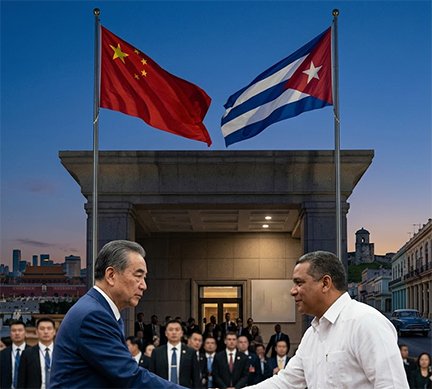
Cuba is facing a multifront US escalation that includes judicial charges against Raul Castro and a naval military buildup, while China and Russia declare their full support for Havana and their rejection of unilateral sanctions, in a sign of the Caribbean island's transformation into a new testing ground for great power conflict.
U.S.-Cuba relations have sharply escalated as Washington indicted former Cuban leader Raul Castro over the downing of two planes in 1996, accompanied by a huge naval military buildup that includes the aircraft carrier Nimitz and its escorts. The move prompted U.S. Secretary of State Marco Rubio to call Cuba a “growing security threat” linked to the Chinese and Russian presence on the island. Beijing responded firmly to the US escalation, asserting Chinese Foreign Ministry spokesman Guo Jiakun rejected his country's "unilateral sanctions that are not based on international law" and its full support for Cuba in "protecting its sovereignty and resisting foreign interference." The Chinese position coincided with similar statements from Russian spokeswoman Maria Zakharova, who condemned the "blatant attempts to interfere in the internal affairs" of a sovereign state. For its part, the Cuban government led by President Miguel Diaz-Canel considered the US accusations as "a political measure that lacks a legal basis and aims to justify military aggression." Diaz-Canel warned that any U.S. attack would lead to a “bloodbath and incalculable consequences” for peace in Latin America and the Caribbean. These developments reveal Cuba's transformation into a new test bed for great-power conflict, with Washington blending judicial and economic sanctions with a show of naval power, while Beijing and Moscow respond with rhetoric based on international law and reject the logic of unilateral hegemony, raising questions about the ability of the international community to counter the return of traditional power and influence policies.
Source: Al-Wehda Al-Arabia News Portal