Oil in the Arab World – Discovery and Economic Transformation
About this Document
Document Content
Introduction:
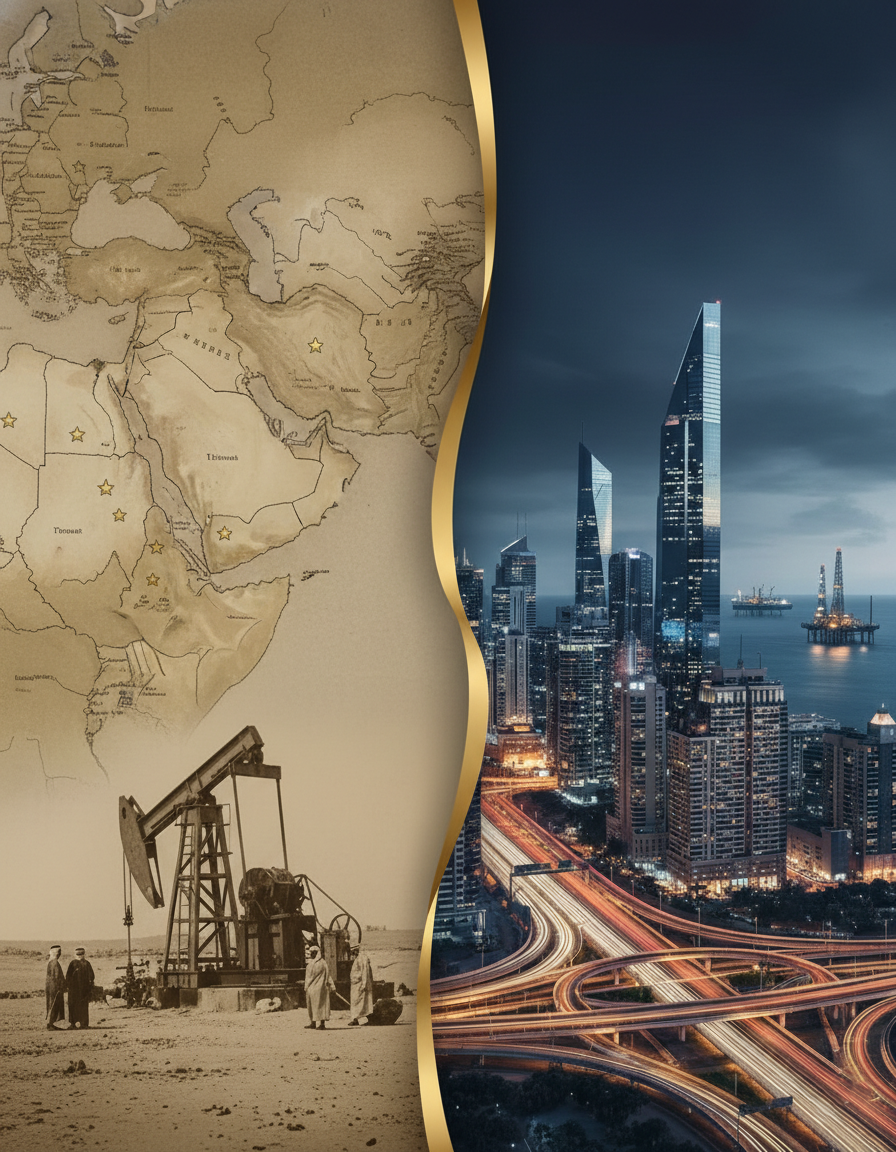
Oil is considered one of the most significant factors that reshaped the Arab world during the twentieth century. Its discovery led to profound economic, political, and social transformations that changed the nature of both the state and society in many Arab countries. Before the rise of oil, most Arab economies relied on traditional trade, agriculture, and limited economic activities. However, the discovery of “black gold” moved the region into a new era of wealth and international influence.
As global demand for energy increased, oil-producing Arab states became major players in the global economy. The policies of major world powers became closely tied to the stability of the region and its natural resources. At the same time, heavy dependence on oil created structural and economic challenges that continue to affect the Arab world today.
1. The Early Discovery of Oil in the Arab World:
• Initial Exploration and Search Operations:
Oil exploration began in the early twentieth century as Western companies became increasingly interested in the Arab region, especially after oil discoveries in Iran. Geological missions and preliminary studies were conducted to explore natural resources in the Gulf and the Arabian Peninsula.
• The Role of Foreign Companies:
Major Western companies initially dominated exploration and production activities, obtaining long-term concessions in exchange for relatively limited payments compared to the enormous profits later generated.
• First Oil Discoveries:
Countries such as Iraq, Saudi Arabia, Kuwait, and Bahrain witnessed early oil discoveries during the first decades of the twentieth century, marking a strategic turning point in the region’s history.
2. Economic Transformation After Oil Discovery:
• Transition from Traditional to Rentier Economies:
Before oil, Gulf and producing states depended heavily on maritime trade, pastoralism, and limited agriculture. Massive oil revenues completely transformed these economies, making oil the primary source of national income.
• Increase in Government Revenues:
Oil provided governments with enormous financial resources, enabling large-scale investments in infrastructure, education, healthcare, and public services.
• Improved Living Standards:
Rapid economic growth led to higher incomes and improved living conditions in many oil-producing Arab countries, accompanied by urban expansion and modern development.
3. Oil and the Construction of the Modern State:
• Infrastructure Development:
Oil revenues were invested in roads, ports, airports, electricity grids, and water systems, accelerating modernization.
• Expansion of State Institutions:
Oil wealth strengthened governments’ ability to build advanced administrative, security, and educational institutions.
• Urban Transformation:
Many Arab cities experienced rapid urban growth, and some desert areas evolved into major global economic centers.
4. Political and Strategic Impact of Oil:
• Strengthening International Influence:
Oil-producing Arab states gained increasing influence in international politics because of the global importance of energy resources.
• Competition Over Resources and Energy:
Oil became closely connected to regional and international tensions, as major powers sought to secure their interests in the region.
• Oil as a Political Tool:
This became especially evident during the 1973 oil embargo, when several Arab countries used oil as a form of political pressure.
5. The Establishment of OPEC and the Arab Role:
• Creation of OPEC:
The Organization of the Petroleum Exporting Countries (OPEC) was established to coordinate oil policies among producing states and protect their economic interests.
• Strengthening Negotiating Power:
The organization gave producing countries greater influence over global oil prices and production levels.
• The Arab Role Within OPEC:
Arab countries became a key force within OPEC because of their vast reserves and high production capacity.
6. Challenges of Oil-Based Economies:
• Excessive Dependence on Oil:
Some states rely almost entirely on oil revenues, making their economies vulnerable to fluctuations in global prices.
• Global Market Volatility:
Declines in oil prices often create financial crises and economic pressures on producing countries.
• Weak Economic Diversification:
In some cases, excessive focus on oil led to the neglect of productive sectors such as industry and agriculture.
7. Attempts at Economic Transformation:
• Diversifying Sources of Income:
Many Arab countries launched economic strategies aimed at reducing dependence on oil by developing new sectors.
• Investment in Technology and Tourism:
Some states focused on supporting digital economies, tourism, and financial services as future alternatives.
• Modern Development Visions:
Long-term strategies emerged to build more sustainable economies capable of adapting to global changes.
8. The Future of Oil in the Arab World:
• Global Energy Transformations:
The world is increasingly shifting toward renewable energy, creating new challenges for oil-producing states.
• Continued Importance of Oil in the Medium Term:
Despite global changes, oil remains a fundamental element of the world economy.
• Need for Economic Adaptation:
The ability of Arab countries to maintain economic stability will depend on their success in building more diversified economic models.
Conclusion:
Oil represented a historic turning point in the Arab world, transforming many countries from limited-resource economies into influential regional and international economic powers. However, this wealth also created complex challenges related to economic dependence, global market fluctuations, and political transformations.
As the global energy market continues to evolve, the future of Arab economies will depend on their ability to balance the benefits of current oil resources with the development of diversified and sustainable economic systems capable of adapting to future changes.